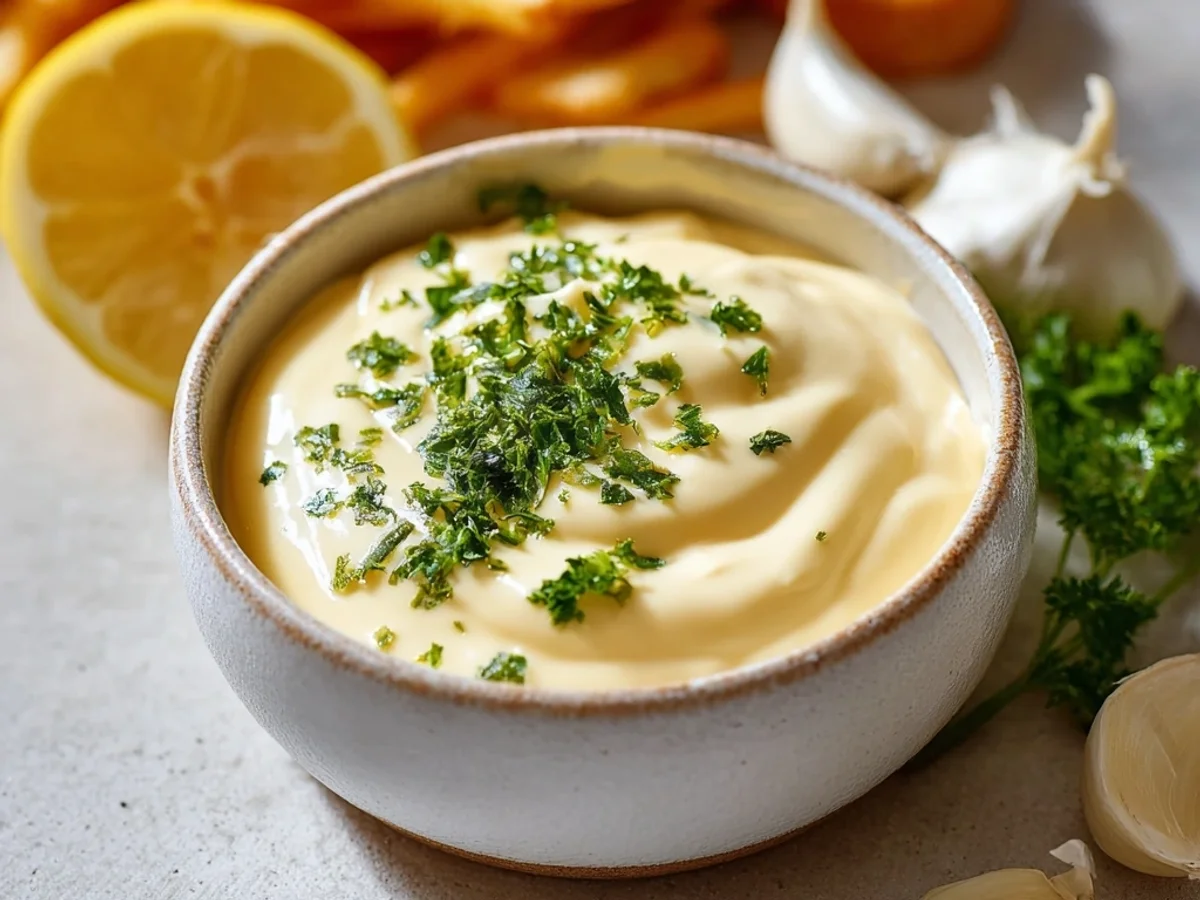


I still remember the first time I tasted real aioli. It was at a tiny little tapas place, tucked away on a cobblestone street, and honestly, I thought it was some magical, impossibly complex sauce. It came with crispy patatas bravas, and with just one bite, I was hooked. The creamy texture, that punchy garlic, the way it just elevated everything on the plate I was convinced it was too fancy for my humble kitchen. For years, I just bought the jarred stuff, which, let's be real, is fine. But it never quite hit that spot. Then, one afternoon, armed with a blender and a "what's the worst that can happen?" attitude, I decided to try making easy homemade aioli myself. And oh, my word, it changed everything! It's truly a game-changer, and surprisingly simple.
My first attempt at making easy homemade aioli was, shall we say, a bit of a disaster. I poured the oil in way too fast, and ended up with a sad, oily puddle instead of a creamy emulsion. Seriously, it looked like a science experiment gone wrong! I almost gave up, but then my friend Elena, who's a wizard in the kitchen, told me her secret: SLOW and STEADY. That's it. No fancy tricks, just patience. Once I got that down, it was smooth sailing. Now, I make it all the time, and honestly, it’s one of those things I wish I’d mastered years ago.
Ingredients for Easy Homemade Aioli
Base Ingredients
- Egg Yolk: This is your emulsifier, the magic binder that brings everything together. Don't use egg whites here, just the rich yolk for that creamy texture. I've heard people use whole eggs, but yolks give it that extra richness I crave.
- Neutral Oil: Grapeseed, canola, or a light olive oil work beautifully. Don't use extra virgin olive oil unless you want a very strong, sometimes bitter, flavor, I tried that once and it was... robust. A good quality neutral oil lets the garlic shine.
Flavor Boosters
- Garlic: fresh garlic, please! Minced super fine or grated. This is aioli, after all! I tend to add a little extra because I'm a garlic fiend, but start with the recommended amount. Dried garlic just doesn't hit the same, trust me.
- Lemon Juice: Freshly squeezed, always! It brightens everything up and helps cut through the richness. Bottled lemon juice just lacks that vibrant zing, and honestly, you can taste the difference.
Essential Seasoning
- Dijon Mustard: This isn't just for flavor, it also helps stabilize the emulsion. Plus, it adds a lovely little tang. Don't skip it! I once ran out and tried a different mustard, and the aioli just wasn't as vibrant.
- Salt & Pepper: To taste, of course. I usually start with a pinch of salt, then add more as I go. Freshly ground black pepper adds a nice subtle kick.
Whipping Up Your Easy Homemade Aioli
- Gather Your Tools:
- First things first, get everything ready. I usually grab my immersion blender and a tall, narrow jar this is key for success! Make sure your egg yolk is at room temperature, it helps with emulsification, honestly. I used to forget this and wonder why my aioli was being so stubborn. Seeing all the ingredients lined up really helps me feel organized, even if the rest of my kitchen is chaos.
- Combine the Base:
- Drop your egg yolk, minced garlic, Dijon mustard, and lemon juice into your blender jar. Add a good pinch of salt and a dash of pepper. Give it a quick pulse with the immersion blender to combine. You'll see it start to look like a pale, slightly thick paste. This is where the magic begins, honestly. Don't worry if it looks a little clumpy, we're just getting acquainted.
- Slowly Add the Oil (The Critical Step!):
- This is where patience is your superpower. With the immersion blender running on low, very, very slowly drizzle in the neutral oil. I mean, a tiny, thin stream. Like a single tear, almost! If you go too fast, it will break, and you'll have a sad, oily mess, trust me, I've been there. You'll see it start to thicken and turn creamy right before your eyes it's so satisfying!
- Keep Blending for Creaminess:
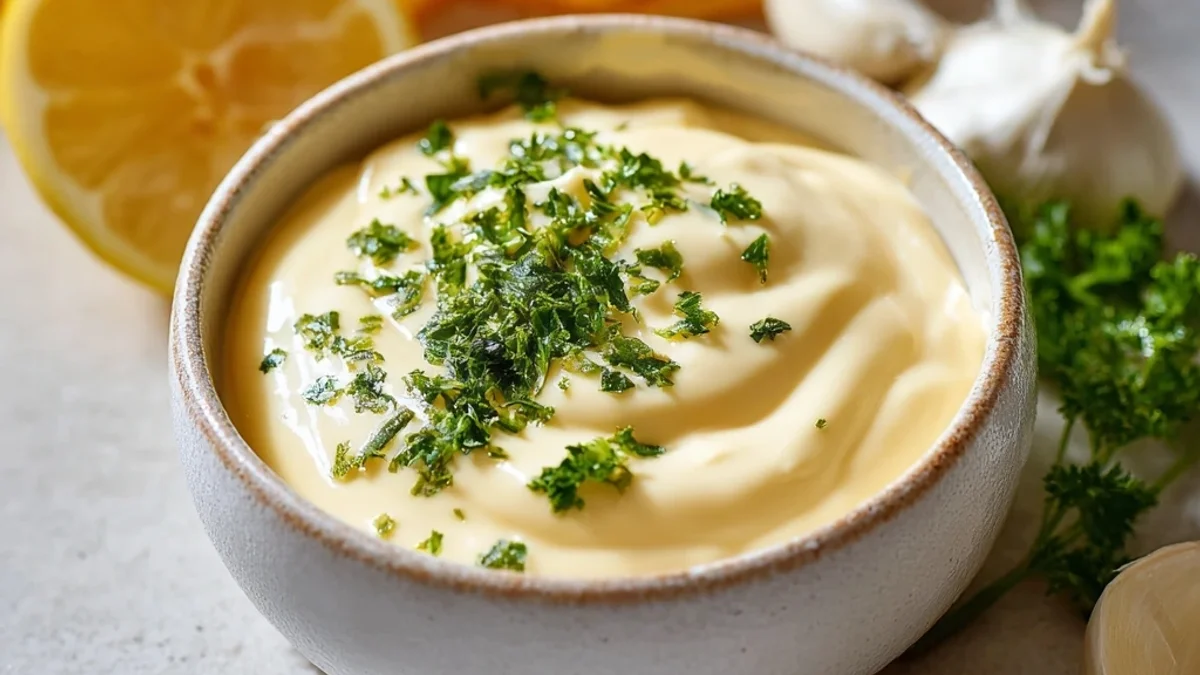
- As you continue to drizzle in the oil, keep that blender running. Once all the oil is incorporated, continue blending for another 30-60 seconds, or until your easy homemade aioli is thick, glossy, and beautifully emulsified. It should look like a luxurious, pale yellow mayonnaise. The smell of fresh garlic will be intoxicating, honestly, it always gets me excited!
- Taste and Adjust:
- Now for the best part! Grab a small spoon and taste your creation. Does it need more salt? A little more lemon juice for brightness? Perhaps another tiny whisper of garlic? Adjust to your preference. This is your aioli, make it sing! I usually add a bit more lemon because I love that zing.
- Serve or Store Your Easy Homemade Aioli:
- Once you're happy with the flavor, transfer your glorious easy homemade aioli to a clean airtight container. It's ready to be slathered on everything! It should be thick enough to hold its shape, creamy, and have that unmistakable garlicky aroma. Honestly, it's so much better than anything from a jar, you'll wonder why you didn't make it sooner.
Making this easy homemade aioli always brings a smile to my face. It feels like such a simple luxury, transforming even the most basic meals into something special. There's something incredibly satisfying about watching those few ingredients come together into such a creamy, flavorful sauce. It’s a little bit of kitchen magic, honestly, and it makes me feel like a culinary genius, even if my counter is still covered in garlic peels.
Easy Homemade Aioli Storage Tips
So, you've made a batch of this glorious easy homemade aioli, and now you're wondering how long it'll last. Because it contains raw egg yolk, it's best enjoyed fresh, but it will keep quite well. I always transfer mine to a clean, airtight container a small mason jar is perfect and pop it straight into the fridge. From my experience, it's usually good for about 3-4 days. After that, the flavor can start to mellow, and honestly, I get a bit paranoid about raw eggs. I once tried to keep it longer, and while it didn't go "bad" in a noticeable way, it just wasn't as vibrant. Don't freeze it, the emulsion will break, and you'll end up with a watery, separated mess. I learned that one the hard way, too! Just make smaller batches if you don't think you'll use it all.

Ingredient Substitutions for Easy Homemade Aioli
Life happens, and sometimes you don't have exactly what the recipe calls for, right? I've definitely experimented. For the oil, if grapeseed isn't on hand, sunflower or even a very light, mild olive oil (not extra virgin!) will work. I tried vegetable oil once, and it was fine, just a bit less subtle. If you're out of fresh lemons, a tiny splash of white wine vinegar can provide that necessary acidity, but honestly, lemon is superior. As for the garlic, if you're really in a pinch, a tiny bit of garlic powder can work, but it won't have that fresh, pungent kick. I'd recommend using less if you go that route, as dried garlic can be more intense. I even tried adding a pinch of smoked paprika once for a smoky aioli, and it worked beautifully for dipping sweet potato fries! It's all about playing around and seeing what you like.
Easy Homemade Aioli Serving Suggestions
Oh, where do I even begin with serving this amazing easy homemade aioli? It truly goes with everything. My absolute favorite way to enjoy it is with crispy oven-baked fries a classic pairing that just hits different. It's also incredible slathered on a juicy burger or used as a spread for sandwiches, turning a regular lunch into something special. Try it as a dip for roasted vegetables, like asparagus or broccoli, or even with grilled fish. I've even dolloped it onto scrambled eggs for a surprisingly delicious breakfast! For a fun appetizer, serve it alongside some crusty bread and olives. And honestly, this aioli and a good glass of crisp white wine? Yes, please, for a cozy night in.
Cultural Backstory of Aioli
Aioli, at its heart, is a glorious celebration of garlic and oil, with roots deeply embedded in Mediterranean cuisine, particularly in Provence, France, and Catalonia, Spain. The name itself, "aioli," comes from "ail" (garlic) and "oli" (oil) in Provençal. It's truly a testament to how simple, quality ingredients can create something so profoundly delicious. For centuries, it was made with a mortar and pestle, a true labor of love, slowly crushing the garlic and emulsifying the oil drop by drop. My grandmother, who had a bit of French heritage, used to tell stories about her own mother making it by hand, and it always sounded so daunting. Finding out I could achieve a similar, delicious result with a blender, making it an easy homemade aioli, felt like unlocking a secret family recipe without all the elbow grease. It connects me to that rich culinary history in a modern, accessible way.
So there you have it, my take on easy homemade aioli! It's truly one of those recipes that feels fancy but is surprisingly approachable. I hope you give it a whirl and fall in love with its creamy, garlicky goodness just like I did. Honestly, it elevates everything it touches, and it’s become a total staple in my kitchen. Don't be afraid to make it your own, experiment with extra lemon or different herbs. And please, tell me what you slather yours on! Happy dipping!

Frequently Asked Questions
- → Why did my easy homemade aioli separate or curdle?
Oh, I've been there! It usually happens because the oil was added too quickly. The key is a slow, steady drizzle. Don't worry, it's a common "oops" moment, and you can sometimes fix it by adding another yolk and slowly re-emulsifying.
- → Can I use a whole egg instead of just the yolk for this easy homemade aioli?
You can, but it won't be quite as rich or thick. The yolk is what gives it that luxurious texture. I've tried it with a whole egg in a pinch, and it works, but I prefer the yolk-only version for that true aioli feel.
- → What's the best way to mince garlic for easy homemade aioli?
I usually use a garlic press or grate it on a microplane for the finest texture. You want it super fine so it disperses evenly and gives a smooth consistency. Big chunks of garlic can be a bit overpowering, honestly!
- → How long does this easy homemade aioli last in the fridge?
Because it uses raw egg, I'd say 3-4 days, tops, when stored in an airtight container. It's always best fresh, but it holds up decently. I wouldn't push it past that, just to be safe!
- → Can I make this easy homemade aioli without an immersion blender?
Yes, you can! A regular blender or food processor works, but you might need to scrape down the sides more often. A whisk and some serious arm power can also do the trick, but it's a lot more work, honestly!