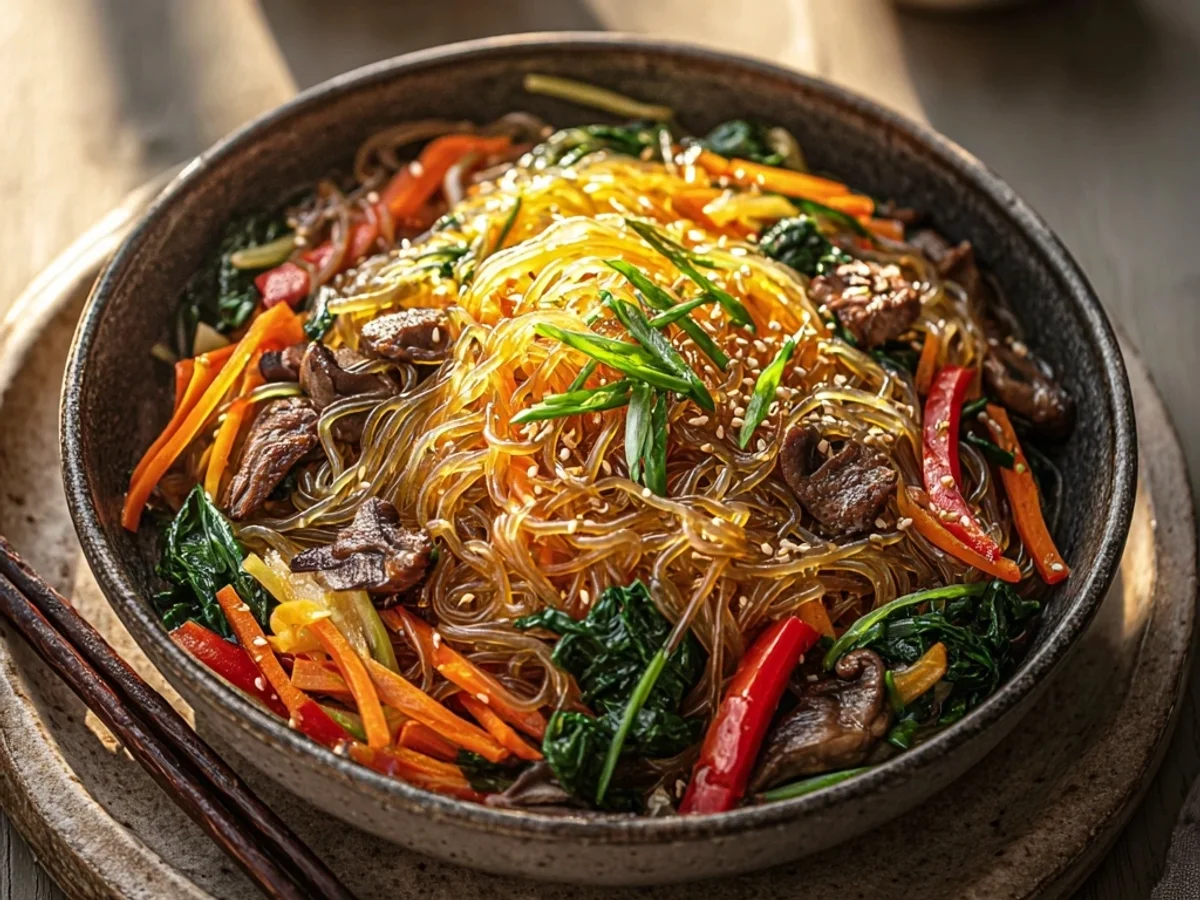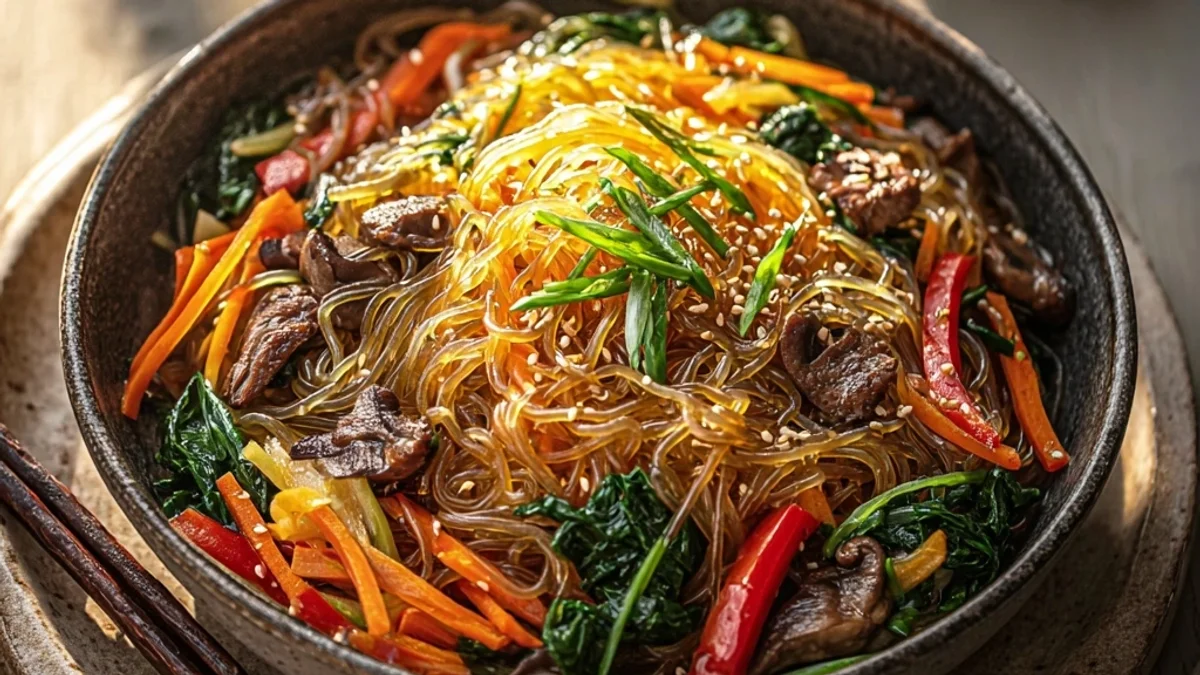


There are some dishes that just transport you, aren't there? For me, that's Authentic korean Japchae. I remember the first time I really got it. It wasn't in a fancy restaurant, but at a bustling korean market stall during a trip years ago. The sweet, savory smell of sesame oil and stir-fried veggies hit me, and I was hooked. It felt so vibrant, so full of life. I tried to recreate it at home, and oh boy, that first attempt was a mess! Noodles stuck together, veggies overcooked. Honestly, I didn't expect it to be so finicky. But after many tries, many "oops" moments, this dish became my personal culinary challenge, and now, my ultimate comfort. It’s special because it reminds me of that first delicious discovery and all the kitchen chaos that followed.
One time, I was so excited to make this dish for friends, I completely forgot to pre-soak the glass noodles. Picture this: me, frantically trying to boil rock-hard noodles while everything else was ready. It was a disaster, a true kitchen panic! We ended up eating it super late, but the laughs were worth it. Now, I always, always set a timer for those noodles. Learn from my mistakes, folks!
Ingredients for Authentic Korean Japchae
- korean Glass Noodles (Dangmyeon): These are the star of the show for this stir-fry! Made from sweet potato starch, they're wonderfully chewy and absorb flavors like a dream. Don't try to sub with rice vermicelli, it just won't be the same, texture-wise.
- Fresh Spinach: I love using fresh baby spinach here, it wilts down beautifully and adds a lovely green pop. I tried frozen once, and it was... okay, but fresh is definitely superior for that vibrant color and slight crunch.
- Shiitake Mushrooms: These bring an amazing umami depth. I soak dried ones for extra flavor, but fresh work too! Honestly, the smell of them rehydrating is one of my favorite kitchen aromas.
- Carrot: Thinly julienned carrots add sweetness and a gorgeous splash of orange. I always make sure mine are cut super thin, otherwise, they can be a bit too crunchy.
- Onion: Sliced thin, it sweetens as it cooks and provides a nice aromatic base. I'm one of those people who always adds a little more onion than the recipe calls for, sue me!
- Bell Pepper (Red & Yellow): For color and a mild sweetness. I usually grab whatever I have, but a mix of red and yellow just makes the dish sing visually. I once used green, and it was a bit too bitter for my liking.
- Soy Sauce (low sodium): The backbone of our savory sauce. I swear by Tamari for a gluten-free option, but any good quality low-sodium soy sauce is fine. Don't use the super salty stuff, you'll regret it!
- Sesame Oil: This is non-negotiable for this recipe! Toasted sesame oil, specifically. It gives that unmistakable nutty, aromatic finish. I always drizzle a little extra at the end, because why not?
- Sugar: Just a touch to balance the savory and salty notes. Brown sugar or regular granulated sugar both work. I sometimes use a tiny bit of maple syrup for a slightly different sweetness.
- Garlic: Freshly minced, always! It adds so much punch. I'm a garlic fiend, so if you see me adding an extra clove, just know it's a personal choice, not a mistake.
- Toasted Sesame Seeds: For garnish and a bit of textural crunch. These are like the sparkly finishing dust for your amazing dish.
Making Authentic Korean Japchae: Step-by-Step
- Prep Your Veggies & Noodles:
- First things first, get all your vegetables prepped. Thinly slice the onion, bell peppers, and carrots. If you're using dried shiitake, get them soaking now. Then, soak your glass noodles in warm water for about 30 minutes, or until pliable but still firm. This is where I always double-check the noodle package instructions, because nothing's worse than mushy noodles, trust me! While they soak, blanch your spinach quickly in boiling water, then shock it in ice water, squeeze out excess water, and chop it up. Phew, that's a lot of chopping and soaking, but it's worth it!
- Sauté the Vegetables Separately:
- This is a key step for creating a great stir-fry, and where I used to mess up big time. In a large skillet or wok, heat a little oil. Sauté each vegetable (carrots, onions, bell peppers, then mushrooms) separately until just tender-crisp. Season each batch with a tiny pinch of salt and pepper. Don't overcrowd the pan, you want them to sauté, not steam. I remember trying to cook them all at once, and it just turned into a soggy mess. The kitchen was a bit chaotic then, but we learn!
- Cook the Glass Noodles:
- Drain your soaked noodles. Bring a pot of water to a boil, and cook the noodles according to package directions usually 5-7 minutes. They should be transparent and chewy, but not soft. Drain them really well and rinse with cold water to stop cooking and prevent sticking. Then, snip them with kitchen shears a few times to make them easier to eat. This is a crucial step for this recipe that I learned from a friend, it makes a huge difference!
- Whip Up the Japchae Sauce:
- While the noodles are cooking, mix up your sauce. In a small bowl, whisk together the soy sauce, sesame oil, sugar, and minced garlic. Taste it! Does it need a tiny bit more sugar? A dash more sesame oil? This is your chance to customize. I always taste and adjust here because my mood for sweetness or saltiness changes daily, honestly. This sauce is what ties all the beautiful components of your Authentic Korean Japchae together.
- Combine Everything (The Big Mix!):
- Now for the fun part bringing it all together! In a really large bowl (or back in your wok if it's huge), combine the cooked noodles, all the sautéed vegetables, and the blanched spinach. Pour the sauce over everything. Now, get in there with your hands (with clean gloves, please!) or a pair of tongs and gently toss until everything is evenly coated. This is where the magic happens, and the colors just pop!
- Final Touches & Serve:
- Once everything is beautifully mixed and glistening with that amazing sauce, transfer your delicious stir-fry to a serving platter. Sprinkle generously with toasted sesame seeds. It should look incredibly vibrant, smell nutty and savory, and feel wonderfully springy. Serve it warm or at room temperature. Honestly, it's hard to resist taking a bite right out of the bowl before it even makes it to the table!
Making this dish has become a little ritual for me. There's something so therapeutic about prepping all the colorful vegetables, each one getting its moment in the pan. Sometimes, my kitchen looks like a tornado hit, with bowls and cutting boards everywhere, but the end result? Pure joy. It's a dish that truly feels like an accomplishment, a labor of love that always pays off.
Storage Tips for Authentic Korean Japchae
Got leftovers of your delicious Japchae? Lucky you! This dish actually holds up really well. I've found it tastes even better the next day as the flavors meld. Just pop it into an airtight container and store it in the fridge for up to 3-4 days. Now, reheating is where I've had some oops moments. I microwaved it once, and the noodles got a bit rubbery, and the sauce separated so don't do that lol. My favorite way to reheat is gently in a skillet with a tiny splash of water or a bit more sesame oil over low heat, just until warmed through. This keeps the noodles nice and pliable. It also freezes okay, but the texture of the noodles and veggies can get a bit softer, so I usually prefer to just make enough for a few days.

Authentic Korean Japchae Ingredient Substitutions
Life happens, and sometimes you don't have every ingredient on hand. I've definitely experimented with subs for this glass noodle stir-fry! For the mushrooms, if shiitake aren't available, cremini or even button mushrooms work in a pinch, though you'll miss a bit of that deep umami. I tried oyster mushrooms once, and it worked... kinda, but they were a bit too delicate. If you don't have bell peppers, zucchini or even thinly sliced cabbage can add a nice crunch and color. For the spinach, you can use other leafy greens like kale or bok choy, just be sure to blanch them properly. And for a gluten-free version, just swap out regular soy sauce for Tamari. I've found that these swaps still make a delicious meal, even if it's not strictly traditional. Don't be afraid to play around!
Serving Suggestions for Authentic Korean Japchae
This dish is a star on its own, but it also plays well with others! I love serving it as a main course for a light dinner, maybe with a simple side of quick cucumber kimchi or a refreshing radish salad. For a heartier meal, it’s amazing alongside some grilled bulgogi or spicy gochujang chicken. Honestly, this dish and a good rom-com? Yes please. For drinks, a crisp Korean rice wine (makgeolli) or even just a cold sparkling water with a lemon slice is perfect. And for dessert, something light like fresh fruit or a small scoop of green tea ice cream balances the meal beautifully. It's so versatile, it fits almost any mood or occasion!
The Cultural Backstory of Authentic Korean Japchae
Authentic Korean Japchae, or "mixed vegetables," has a fascinating history! It actually started as a dish of stir-fried vegetables without noodles, served for Korean royalty centuries ago. Glass noodles were only added later, in the early 20th century. This dish is often served at special occasions and celebrations in Korea, like birthdays and holidays, symbolizing longevity and good fortune. For me, discovering its roots made me appreciate it even more. It’s not just a delicious meal, it’s a connection to a rich cultural heritage. I remember learning about its history in a cookbook I picked up, and it made all those kitchen experiments feel so much more meaningful, like I was part of a long tradition. It truly is a dish that carries a story in every bite.
So there you have it, my take on this amazing stir-fry. It's more than just a recipe for me, it's a journey of discovery, a testament to kitchen perseverance, and a dish that brings so much warmth to our table. Every time I make it, I think of that bustling market and all the happy mistakes I've made along the way. I really hope you give it a try and make it your own. Don't forget to share your Japchae adventures with me!

Frequently Asked Questions About Authentic Korean Japchae
- → Can I make this dish ahead of time?
Absolutely! This dish is a fantastic make-ahead option. I often prep it a day in advance for parties. Just store it in an airtight container in the fridge, and it tastes even better as the flavors deepen. Just remember my reheating tip!
- → What if I can't find Korean glass noodles?
While traditional glass noodles are best for this recipe, if you truly can't find them, you could try thicker rice vermicelli, but be warned, the texture will be quite different. I’ve tried it, it works, but it’s not the same chewy experience.
- → Why do you sauté the vegetables separately for Authentic Korean Japchae?
This is a trick I learned the hard way! Sautéing them separately ensures each vegetable cooks to its perfect doneness, maintains its vibrant color, and prevents them from getting soggy. It’s a little extra effort, but it truly makes a difference in texture and appearance.
- → How long does this Japchae last in the fridge?
In an airtight container, your delicious Japchae will stay fresh and tasty in the refrigerator for up to 3-4 days. I sometimes make a big batch on Sunday for quick weekday lunches, and it holds up perfectly.
- → Can I add protein to this Japchae recipe?
Oh, for sure! I often add thinly sliced marinated beef (bulgogi style) or chicken to make it a more substantial meal. Tofu or tempeh would also be fantastic vegetarian options. Just cook them separately and add them in when you combine everything.