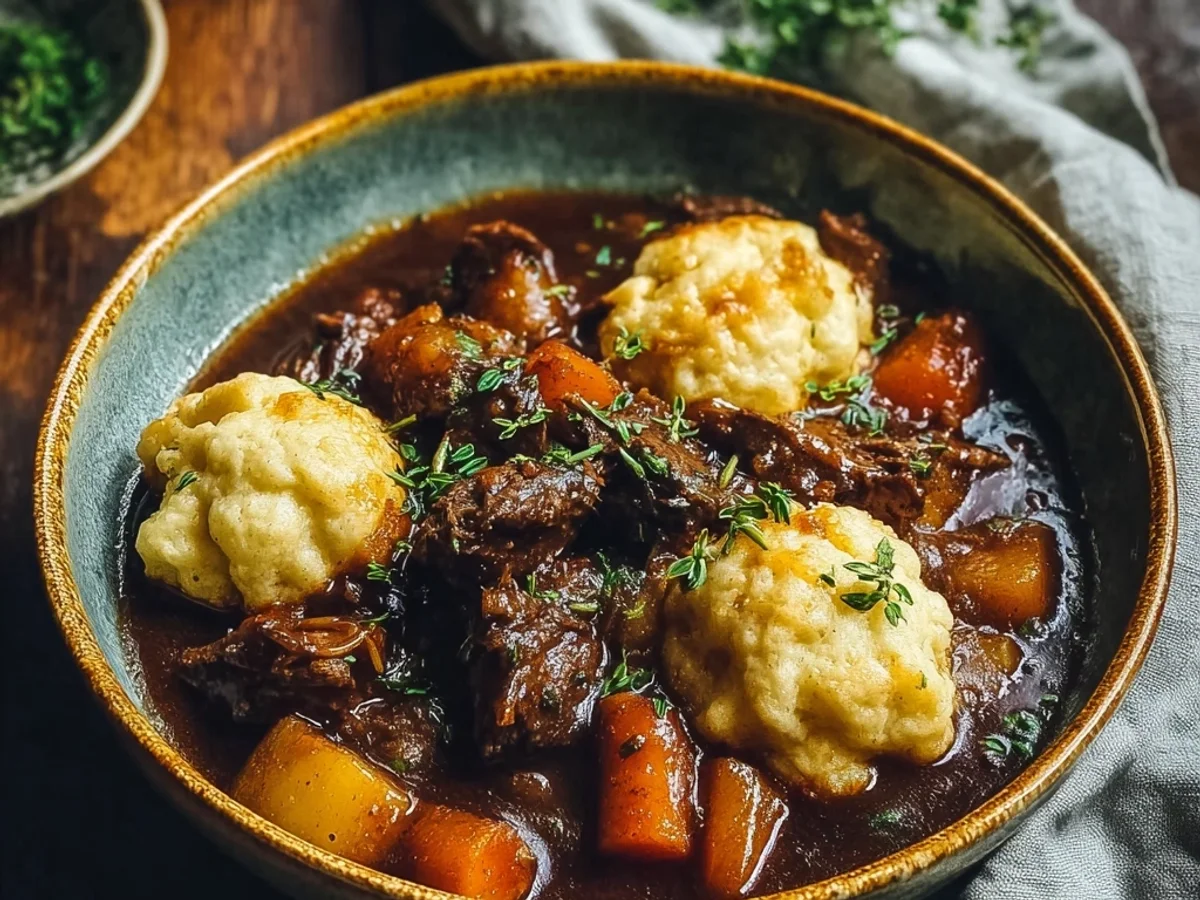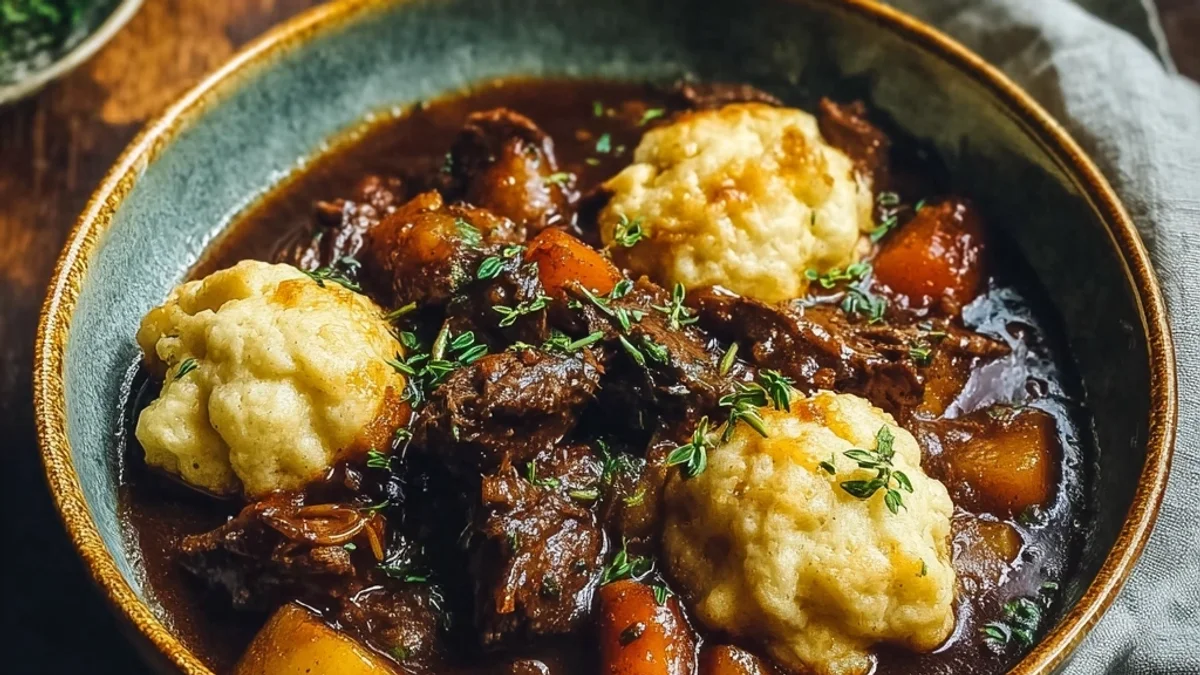


Honestly, there’s nothing quite like the smell of a rich beef stew bubbling away on a chilly afternoon. I remember the first time I attempted this Classic Beef stew & Dumplings. It was a miserable, rainy Saturday, and I was feeling ambitious, but also a little terrified. I’d watched my grandma make it a hundred times, but actually doing it? That felt different. I nearly burnt the beef (oops!), but the house still filled with that incredible savory aroma. It’s a dish that just wraps you up in a warm hug, you know? It’s not just food, it’s a feeling.
My husband still teases me about the time I tried to make the dumplings 'healthier' by using whole wheat flour and, ahem, forgetting the suet. Let's just say they were more like dense, savory rocks than fluffy clouds! Live and learn, right? Now, I stick to the classic way for these dumplings they're worth it, trust me. This Classic Beef Stew & Dumplings recipe has become a staple in my kitchen, a real go-to for when I need some serious comfort.
Ingredients for Classic Beef Stew & Dumplings
Stew Essentials
- Beef Chuck: This is your star! It's got the right amount of fat and connective tissue to break down into something wonderfully tender and flavorful during a long simmer. Don't cheap out on this, it makes all the difference for a truly rich stew.
- Beef Broth: For depth and liquid gold! I always go for a good quality, low-sodium beef broth so I can control the seasoning myself. It really builds the base for this hearty Classic Beef Stew & Dumplings.
- Red Wine: A splash of dry red wine (like Cabernet Sauvignon or Merlot) adds so much complexity and richness. Honestly, don't skip it unless you absolutely have to. It makes the stew sing!
- Tomato Paste: This little tube of magic adds a concentrated umami punch and helps thicken the stew ever so slightly. Just a tablespoon or two, trust me.
Flavor Builders
- Onion, Carrots, Celery: The holy trinity of mirepoix! These veggies lay the groundwork for a sweet, aromatic base. I always chop them fairly chunky because I like them to hold their shape a bit in the finished stew.
- Garlic: Lots of it! I never measure, just mince a few cloves. You can never have too much garlic, in my humble opinion.
- Bay Leaves & Fresh Thyme: These herbs infuse the stew with classic, earthy notes. Fresh thyme is a must if you can get it, it just smells so wonderfully fragrant while it simmers.
- Worcestershire Sauce: A secret weapon for umami! Just a dash deepens the savory flavor without being overpowering.
Dumpling Details
- All-Purpose Flour: The base for your fluffy dumplings. Nothing fancy needed here, just plain old AP flour.
- Suet or Cold butter: Traditional dumplings use suet, which gives them an incredible texture. If you can't find it, cold unsalted butter cut into small pieces works as a good substitute, though the texture will be slightly different. I've tried both, and honestly, suet is worth seeking out for the real deal!
- Baking Powder: This is what gives your dumplings that lovely lift and fluffiness. Don't forget it, or you'll have those dense 'rock' dumplings I mentioned!
- Milk: Just enough to bring the dumpling dough together. I usually use whole milk for richness, but whatever you have on hand should be fine.
Instructions for Making Your Classic Beef Stew & Dumplings
- Sear the Beef:
- First things first, get your beef chuck nice and dry with paper towels. This is crucial for a good sear! Heat a heavy-bottomed pot or Dutch oven over medium-high heat with a little oil. Work in batches so you don't overcrowd the pan seriously, if you try to do it all at once, the beef will steam instead of brown, and we want that gorgeous, dark crust for flavor. This step smells amazing, that rich, caramelized beef aroma just fills the kitchen. Once browned on all sides, remove the beef and set it aside. Honestly, this is where I used to rush, and my stew suffered for it!
- Sauté the Aromatics:
- Reduce the heat to medium. Add the chopped onions, carrots, and celery to the pot, scraping up any delicious browned bits from the beef. Sauté them for about 8-10 minutes until they start to soften and become fragrant. Then, toss in your minced garlic and tomato paste, stirring constantly for another minute until the tomato paste darkens slightly and smells sweet. This step builds so much foundational flavor for your Classic Beef Stew & Dumplings. I always get a little teary-eyed from the onions, but it's worth it!
- Deglaze and Simmer:
- Pour in the red wine, scraping the bottom of the pot really well to release any remaining stuck-on bits that's pure flavor! Let it simmer for a couple of minutes until it's reduced by about half. Then, add the beef broth, Worcestershire sauce, bay leaves, and fresh thyme. Return the seared beef to the pot. Bring it to a gentle simmer, then reduce the heat to low, cover, and let it cook for at least 2 to 2.5 hours, or until the beef is fork-tender. This is where the magic happens, the whole house starts to smell unbelievably good.
- Prepare the Dumplings:
- About 20-30 minutes before the stew is ready, prepare your dumplings. In a medium bowl, whisk together the flour, baking powder, and a pinch of salt. Add the cold suet (or butter), using your fingertips to rub it into the flour until the mixture resembles coarse breadcrumbs. This step is key for that light, fluffy texture! Then, gradually add the milk, a tablespoon at a time, mixing lightly with a fork until a soft, shaggy dough forms. Be careful not to overmix, just bring it together. I've definitely overmixed before, resulting in tough dumplings oops!
- Cook the Dumplings:
- Uncover the stew. It should be bubbling gently. Using two spoons, drop spoonfuls of the dumpling dough directly onto the simmering stew. Don't crowd them too much, they need space to expand. Re-cover the pot tightly and let the dumplings steam for about 15-20 minutes, or until they're puffed up and cooked through. Try not to lift the lid too often during this time the steam is what makes them light! Seeing them swell up is honestly so satisfying, a true sign of comfort food coming together.
- Finish and Serve:
- Once the dumplings are cooked, remove the bay leaves. Taste the Classic Beef Stew & Dumplings and adjust seasoning with salt and pepper as needed. Sometimes I stir in a handful of fresh chopped parsley right at the end for a pop of freshness and color. Ladle the hearty stew with its tender beef and fluffy dumplings into warm bowls. It should be thick, rich, and incredibly aromatic. This is the moment you've been waiting for enjoy your delicious creation!
There’s something so grounding about making a big pot of stew. It's a hands-on process, but the smells, the anticipation, the warmth it brings to the kitchen it’s all part of the joy. I often make this Classic Beef Stew & Dumplings when friends are coming over, or after a long, busy week. It just feels like a hug in a bowl, you know? The kind of meal that makes everyone slow down and enjoy the moment.
Storage Tips for Classic Beef Stew & Dumplings
This Classic Beef Stew & Dumplings is one of those dishes that honestly tastes even better the next day, as all those flavors have more time to meld. Once completely cooled, transfer any leftover stew (with or without dumplings) to airtight containers. It will keep beautifully in the refrigerator for up to 3-4 days. If you've got dumplings in there, they might get a little softer, but they're still delicious. For longer storage, you can freeze the stew without the dumplings for up to 3 months. I usually freeze the stew base separately and then make fresh dumplings when I'm ready to reheat and serve. I microwaved it once with the dumplings already in, and they got a bit gummy so don't do that lol! Reheat gently on the stovetop, adding a splash of broth or water if it's too thick.

Ingredient Substitutions for Classic Beef Stew & Dumplings
Life happens, and sometimes you don't have every ingredient. I totally get it! For the beef, you could use stewing beef or even short ribs, though the cooking time might vary slightly. I once tried it with leaner sirloin, and honestly, it was a bit dry stick to chuck if you can! No red wine? No problem. You can substitute with more beef broth and a splash of balsamic vinegar for that acidic kick, which actually worked surprisingly well when I was out of wine. For the dumplings, if suet is absolutely nowhere to be found, cold unsalted butter is your next best bet, just cut it into small pieces and rub it into the flour. You can also swap out the carrots and celery for parsnips or potatoes if that's what you have. I've even thrown in some frozen peas at the very end for a pop of green, and it was a nice touch.
Classic Beef Stew & Dumplings Serving Suggestions
Oh, the ways to enjoy this hearty Classic Beef Stew & Dumplings! My absolute favorite way is just as it is, ladled generously into a big, warm bowl, maybe with a sprinkle of fresh parsley. But sometimes, I crave a little extra something. A crusty baguette or some warm, buttered sourdough is practically mandatory for soaking up all that incredible gravy. If you're feeling extra, a side of creamy mashed potatoes or even some roasted root vegetables would be divine. And for a drink? A robust red wine, like the one you used in the stew, or a dark, malty ale pairs beautifully. This dish and a good movie on a cold night? Yes, please. It's truly a complete meal that just screams comfort.
Why This Classic Beef Stew & Dumplings Recipe Matters
For me, this Classic Beef Stew & Dumplings isn't just a recipe, it's a connection to warmth, family, and simpler times. It reminds me of those Sunday dinners at my grandmother’s house, where the kitchen was always the heart of everything. There’s something deeply satisfying about taking humble ingredients and transforming them into something so rich and comforting, a dish that has nourished generations. It’s a testament to slow cooking, to patience, and to the idea that some of the best meals are the ones that take time and love. It’s a classic for a reason, you know? It just feels right, like coming home after a long journey.
Making this Classic Beef Stew & Dumplings always feels like a little victory in my kitchen. The way the beef just falls apart, the fluffy dumplings soaking up that incredible gravy it’s pure magic. Every time, I’m reminded of why I love cooking so much. It’s about creating something nourishing, something that brings joy. I really hope you give this recipe a try and make some wonderful memories of your own. Let me know how it turns out for you!

Frequently Asked Questions
- → Can I make this classic beef stew ahead of time?
Absolutely! I almost always make the stew a day in advance, without the dumplings. The flavors honestly deepen overnight, making it even more delicious. Just cool completely, refrigerate, and then reheat gently on the stove. Make the dumplings fresh right before serving!
- → What if I don't have red wine for the stew?
No worries! I've been there. You can substitute with an equal amount of beef broth and add a tablespoon of balsamic vinegar. It won't be exactly the same, but it still provides that lovely depth and acidity. It worked pretty well for me in a pinch!
- → My beef isn't getting tender after 2 hours, what's wrong?
Don't panic! Sometimes beef just needs a little more time. This happened to me once when I used a slightly tougher cut. Just keep simmering it, covered, over low heat. It might need another hour or even more, depending on the beef and your pot. Patience is key for truly tender beef stew!
- → Can I freeze the dumplings with the stew?
You can, but I don't usually recommend it. The texture of the dumplings can change quite a bit after freezing and reheating, often becoming a bit mushy or dense. I prefer to freeze the stew base separately and then whip up a fresh batch of dumplings when I'm ready to enjoy it. Trust me, it's worth the extra step!
- → Can I add other vegetables to this classic beef stew?
Totally! I often throw in whatever I have on hand. Parsnips, potatoes (added in the last hour of simmering), or even some mushrooms are great additions. Just be mindful of how long they need to cook so they don't turn to mush. Experimentation is half the fun, right?